How To Search for Cedar Rapids Property Records
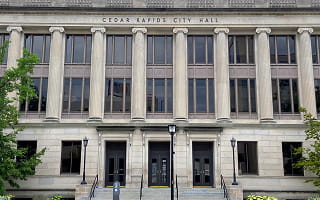
Always do your research before buying or investing in property. You can use property records to do this. They contain a trove of information that offer valuable insight into ownership histories, assessed values, tax obligations, zoning classifications, liens, foreclosures, amenities, and other crucial details needed to make smart investment decisions. Cedar Rapids property records are public, which means that anyone can view them or request copies. The key is knowing where to look. Below is a list of primary resources you can use to find different types of Cedar Rapids property records.
Linn County Recorder's Office

The Linn County Recorder's Office maintains official copies of documents that establish real estate ownership in Cedar Rapids, such as deeds, mortgages, liens, assignments and releases, plats and surveys, powers of attorney, and more. The recorder's office provides a real estate record search tool that you can use to access these documents online. Searches can be done by name, date range, document number, document type, book and page number, and more. You also have the option of searching and requesting copies of these records in person at the recorder's office, located at 935 2nd Street SW, Cedar Rapids, IA 52404. Note that copy fees may apply. You can call (319) 892-5420 for general inquiries and assistance.
Cedar Rapids City Assessor's Office

The Cedar Rapids City Assessor's Office is tasked with identifying, listing, and valuing all real property located within Cedar Rapids city limits for tax purposes. This office is a key resource for information on a property's assessed values, ownership data, features and characteristics, sales history, and more. You can look up this information online by parcel number, name, address, legal description, and size (lot area) using the city assessor's real estate search tool. You can also visit the assessor's office at the City Services Center, 500 15th Ave. SW, Cedar Rapids, IA 52404, for in-person services or call (319) 286-5888 for general inquiries and assistance.
Linn County Treasurer's Office
The Linn County Treasurer's Office is responsible for billing and collecting property taxes for the City of Cedar Rapids. This office is a great resource for tax-related property records, such as tax bills, payment histories, and delinquency status. You can use the office's property tax search tool to look up this information online; searches may be done by geo-parcel number (GPN) or address. If you prefer in-person services, you can visit the treasurer's office at 935 Second Street SW, Cedar Rapids, IA 52404, or call them at (319) 892-5500 for general inquiries and assistance.
Linn County District Court

The Linn County District Court (Judicial District 6) handles property-related legal matters in Cedar Rapids, including foreclosure filings, boundary disputes, and civil judgments that may affect property title. You can look up these records online using the Iowa Courts Online Search portal. Searches can be done by name or case ID; an advanced search option is also available, but registration is required for this. For records or actual case documents not fully available online, you can visit the Clerk of Court's Office, located at the Linn County Courthouse, 51 Third Avenue Bridge, Cedar Rapids, IA 52401. You can also call (319) 398-3411 or email countyclerk.linn@iowacourts.gov for more information and assistance.
City of Cedar Rapids Map Applications

The City of Cedar Rapids offers interactive GIS map applications on its website that you can use to view property boundaries, parcel dimensions, zoning, and designated flood zones within the city. These tools are helpful for layering together information that doesn't always appear in standard property records and provide additional context that can help you visualize information and interpret documents accurately to make informed decisions.
Cedar Rapids Property Taxes
Cedar Rapids property taxes fund essential local government services, including police and fire departments, emergency services, public schools, libraries, parks, and road maintenance. The Cedar Rapids City Assessor is responsible for determining the "actual" or market value of real property in the city, while the Linn County Treasurer is responsible for billing, collecting, and distributing property tax revenues. Although Iowa law requires properties to be revalued every two years, the Cedar Rapids City Assessor's Office conducts annual revaluations to keep assessments current. Taxes are calculated by applying a state-determined "rollback rate" to the property's assessed value to establish its taxable value. This taxable value is then multiplied by the combined millage rate of all local taxing authorities to determine the final tax bill.
Property tax bills are typically mailed out in August. Taxes are payable in two installments: the first half is due by September 1st (delinquent after September 30th), and the second half is due by March 1st of the following year (delinquent after March 31st). If these dates fall on a weekend or holiday, the deadline is extended to the next business day. Delinquent taxes accrue interest at a rate of 1.5% per month. Long-term delinquency may result in the property being sold at the annual tax sale to recover the debt. The Linn County Treasurer offers multiple property tax payment options, including online, by mail, or in person. You can call the treasurer's office at (319) 892-5500 for more information and assistance.
![]() Assessments
Assessments

The Cedar Rapids City Assessor's Office assesses all real property within the city limits to determine each property's actual value (its fair and reasonable market value). Properties are evaluated using standard appraisal methods. These include the sales comparison approach, which analyzes recent sales of similar nearby properties; the cost approach, which evaluates land value plus the cost of replacing improvements minus depreciation; and the income approach, which determines value based on the potential revenue a property can generate. Once a property's value has been established, a state-mandated "rollback" (assessment limitation) is applied to this value to calculate the property's taxable value. Per state law (Iowa Code §428.4), all real property in Iowa is required to be revalued every two years, during odd-numbered years; however, the city assessor's office performs assessments every year to ensure accuracy.
Assessment notices are typically mailed to property owners by April 1st every year. If you disagree with your property's valuation, you have two options. You may request an informal review with the assessor's office; if an agreement is reached between April 2 and April 25, the assessment will be adjusted. Your other option is to file a formal appeal with the Cedar Rapids Board of Review; this must be done between April 2nd and April 30th. Appeal forms are available at the city assessor's office. You can call the office at (319) 286-5888 for more information and general assistance with reviewing or appealing your property assessment.
![]() Appraisals
Appraisals

Cedar Rapids assessments work similarly to appraisals. They both determine the fair value of property by comparing similar properties with others in the local area that have sold recently. In cases of odd structures or new construction, the county may call upon an appraiser to help determine the value. Estate planners, courts, and lenders also use appraisals to value real property.
![]() Tax Rates
Tax Rates

Cedar Rapids, Iowa, has a median effective property tax rate of 1.80%, significantly higher than the national median of 1.02%, as well as the Iowa state median of 1.54%. The city's average annual tax bill is $3,070, which is also higher than the national average of $2,400.
Here's a look at how Cedar Rapids' tax rate compares to other counties in Iowa:
- Benton County 1.37%
- Black Hawk County 1.57%
- Emmet County 1.51%
- Jasper County 1.61%
- Johnson County 1.71%
- Marion County 1.40%
- Muscatine County 1.67%
- Pocahontas County 1.38%
- Polk County 1.69%
- Scott County 1.63%
- Sioux County 1.40%
- Story County 1.36%
- Taylor County 1.27%
- Woodbury County 1.52%
![]() Exemptions
Exemptions

Property taxes in Cedar Rapids are higher than both state and national averages, and some homeowners may have difficulties keeping up with payments. Thankfully, there are several tax credits and exemptions available to eligible homeowners that can help to significantly reduce their annual bill. These include:
-
Homestead Tax Credit: Available to all homeowners who use the property as their primary residence.
-
65+ Homestead Exemption: Available to senior homeowners (aged 65 or older) and provides additional reductions in taxable value on top of the standard homestead credit.
-
Military Service Exemption: Available to honorably discharged veterans and their surviving spouses and provides a reduction in the property's taxable value.
-
Disabled Veteran's Homestead Credit: Offers a 100% exemption from property taxes for veterans with a permanent, 100% service-connected permanent disability.
You can contact the Linn County Assessor's Office at (319) 892-5220 for more details on available tax credits and exemptions, including specific eligibility requirements and how to apply for one.
Cedar Rapids Building Permits/Inspections
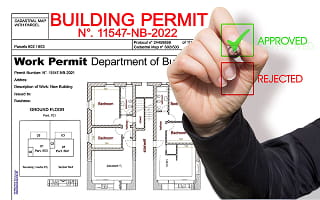
You need a permit for most construction, renovation, or repair projects in Cedar Rapids. However, exemptions are made for certain types of work. These include cosmetic finish work like painting, wallpapering, tiling, carpeting, and installing cabinets or countertops, and repairs that don't affect the building's structural integrity and systems. Permits are issued by the Cedar Rapids Building Services Department. You can apply for one and also make payments, upload documents, and schedule inspections online using the city's Customer Self Service (CSS) portal. If you prefer in-person services, you can visit the department at 500 15th Ave. SW, Cedar Rapids, IA 52404, or call (319) 286-5831 for general information and assistance.
Common types of permits issued in Cedar Rapids include:
-
Building Permits: Required for new constructions, structural additions, and major remodels.
-
New Single-Family/Townhouse Building Permits: Issued for new residential properties.
-
Building Residential Permits: Issued for work on existing single-family and multi-family properties.
-
General Commercial Building Permits: Issued for other types of properties.
-
-
Demolition Permits: Required for tearing down entire structures.
-
Trade Permits: Issued for specific licensed construction trades and may be required even when a building permit is not needed.
-
Mechanical Permits: Required for installing or replacing HVAC systems, furnaces, ductwork, and other related mechanical equipment.
-
Electrical Permits: Required for installing, modifying, or repairing electrical wiring or equipment.
-
Plumbing Permits: Required for installing, altering, or repairing water supply, drainage, and other plumbing systems.
-
When applying for any of these permits, you must submit the proper documentation (building plans, blueprints, contractor licenses, materials lists, etc.). You must also pay the appropriate fee.
Building inspections are part of the permit process, and they ensure that the work complies with local building and safety codes. You can schedule an inspection through the online portal or in person at the office during regular business hours.
Real Estate in the City of Cedar Rapids
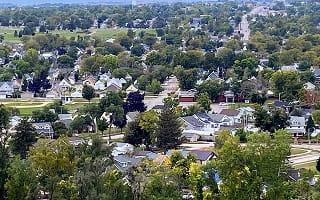
Nicknamed the "City of Five Seasons" as part of a local identity campaign to highlight its quality of life and community spirit, Cedar Rapids is Iowa's second-largest city and a major global hub for food processing and bio-manufacturing. Several companies are either headquartered or have facilities in the city, including Collins Aerospace, CRST, Quaker Oats, General Mills, and Newspaperarchive (the largest newspaper archive in North America). It is also home to professional and semi-professional sports teams and boasts a vibrant arts scene, with attractions like the Cedar Rapids Museum of Art, the historic Paramount Theatre, the African American Museum of Iowa, and the National Czech & Slovak Museum & Library.
Cedar Rapids, Iowa, has a population of 137,710 residents. The city has 64,678 housing units, with 92% of these units occupied and 66% owner-occupied. There is a diverse range of housing options, including single-family homes, apartments, condos, townhomes, historic buildings, and modern suburban developments. Common housing styles include Ranch, Craftsman, Victorian, Colonial Revival, Cape Cod, American Foursquare, and Mid-Century Modern. The average home value in Cedar Rapids, IA, is $202,654, up by 4.2% from previous years. Note that actual home values can vary across different neighborhoods. Here are some examples:
- Cedar Hills $191,711
- Kenwood Park $157,967
- Lincolnway Village $194,318
- Mound View $138,838
- Noelridge Park $166,970
- Oakhill Jackson $144,244
- Wellington Heights $120,295
The Cedar Rapids, Iowa, real estate market is a stable and competitive market, tilted toward sellers, with rising prices, limited inventory, and strong buyer demand. Homes typically go under contract within 21 days of listing, and over 16% of these homes sell above the listing price.
Searching across multiple government offices and databases to piece together a complete property profile can be time-consuming, but PropertyChecker simplifies the process by pulling key ownership details, tax records, transaction histories, and more into a single, easy-to-use platform. Whether you are buying, investing, or simply doing your due diligence, visit PropertyChecker.com to get the property information you need in minutes.